
豪杰春香
Exclusive: Scholars trace Imperial Japanese Army’s germ-warfare outrage across Asia, calling for preventing atrocities from recurring_我的网站

A |
A documentary revisiting the Imperial Japanese Army's lethal human experiments and biological warfare program has attracted more than 1 million views online, bringing renewed global attention to one of World War II's darkest chapters and a history still little known outside Asia.
Produced by Singapore-based Channel NewsAsia (CNA), Inside Unit 731: Japan's Secret Human Experiments features historians and descendants of survivors from countries including the UK, the US, Japan and Singapore. Through their accounts, the documentary details the germ warfare, human experimentation and other crimes against humanity committed by Unit 731 - officially known as the Epidemic Prevention and Water Purification Department of the Kwantung Army - during Japan's war of aggression.
Several US, Singaporean and Japanese scholars featured in the documentary recently told the Global Times that the evidence of Unit 731's crimes against humanity is irrefutable. The atrocities represent a shared trauma not only for Asian countries subjected to Japanese fascist aggression, but also for all humanity. "More than 80 years after the war, reviving the collective memory of affected countries is essential to safeguarding peace," they said.
Victims of germ warfare
For much of his life, Katsutoshi Takegami knew only that his father had once worked in China. It was not until years after his father's death that a discovery in the family storehouse prompted the 78-year-old resident of Komagane, Nagano Prefecture, Japan, to investigate what that work had involved.
Several thick photo albums had been packed into boxes marked "Nara Army Hospital." Across the black-and-white photographs were references to the "Epidemic Prevention Section" and the "Central China Epidemic Prevention and Water Purification Department."
"My father worked at a local public health center after World War II. He had mentioned that he had worked in China, but never revealed any details," Takegami told the Global Times. "When I saw those photographs, I desperately wanted to know what my father had done in China."
Determined to find an answer, Takegami closed the café he had spent years building, began examining historical records and consulted researchers. He even traveled to China in search of clues.
His investigation eventually revealed that his father had been a member of Unit 1644, also known as Unit Ei 1644, a germ-warfare formation based in Nanjing. The discovery came as a profound shock.
"When people talk about the Imperial Japanese Army's germ warfare, Unit 731 is usually the first thing that comes to mind. In fact, the Japanese military operated many such units," Takegami said.
"The general public knows almost nothing about them, and very few scholars study them. Historical evidence shows that the areas victimized by germ warfare extended far beyond Harbin, where Unit 731 was headquartered. China was by no means the only victimized country," he added.
For Singaporean independent scholar Lim Shao Bin, the realization that this biological warfare network had reached Southeast Asia came on February 14, 2016.
That day, Nobuyoshi Takashima, professor emeritus at the University of the Ryukyus, and his wife took Lim to the former Tampoi Mental Hospital on the outskirts of Johor Bahru, Malaysia. Pointing to a row of buildings, Takashima told him: "This was a wartime production base for Unit 731's plague bombs."
"That cut deeply into me," Lim told the Global Times. "I had studied in Japan since the 1980s and believed I knew a great deal about the crimes committed by the Japanese invaders in China. But I never imagined that Singapore and Malaysia - right on our doorstep - had also suffered at the hands of Unit 731."
From that day forward, Lim began systematically tracing the activities of Japanese germ-warfare units in Southeast Asia.
He explained that the Epidemic Prevention Research Laboratory of the Imperial Japanese Army Medical School established the Epidemic Prevention and Water Purification Department of the Kwantung Army in Pingfang, Harbin, which became known as Unit 731.
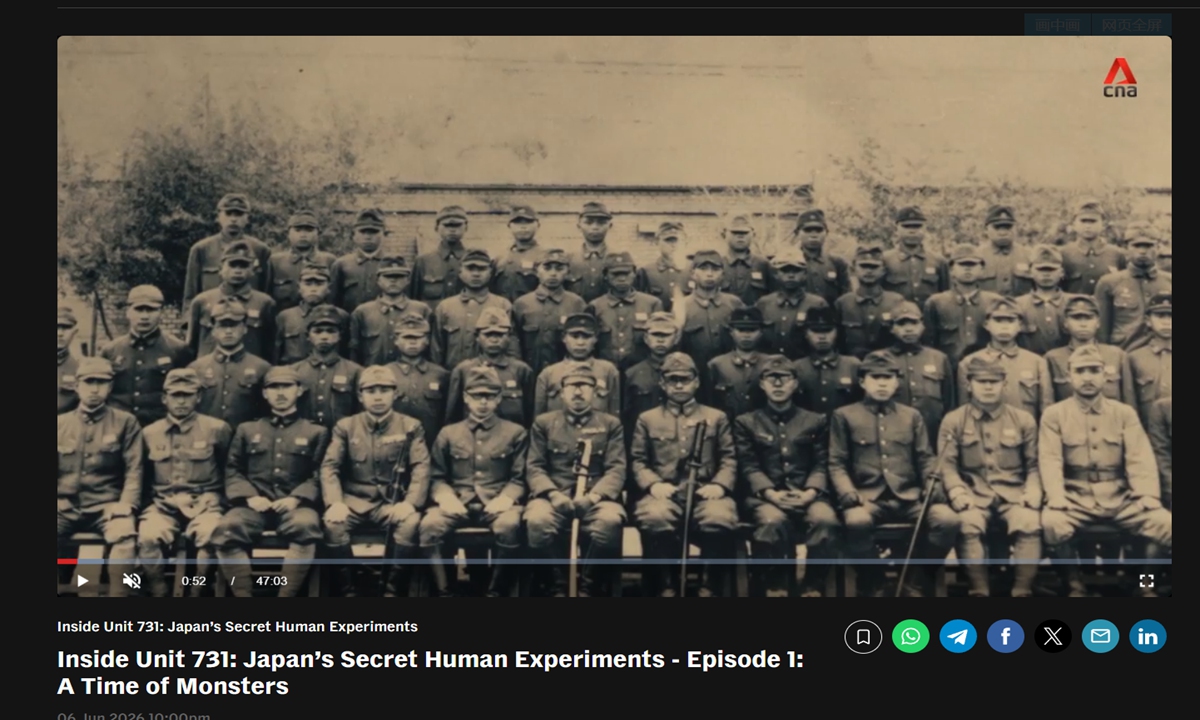
Using Unit 731 as the center of its operations, the Japanese military established the North China Expeditionary Army Epidemic Prevention and Water Purification Department in Beijing, known as Unit 1855; Unit Ei 1644 in Nanjing; and Unit Nami 8604 in Guangzhou.
''Yet this network still contained a major missing piece - Southeast Asia,'' Lim said.
The Japanese military established the Epidemic Prevention and Water Purification Department of Southern Expeditionary Army in Singapore under the code name Oka Unit 9420. Together, these interconnected germ-warfare formations constituted what Lim described as the "Unit 731 system."
A map compiled by Lim marks five branches of Oka Unit 9420 across Southeast Asia: the Malaya, Java, Manila, Indochina and Thailand branches. These facilities produced plague bacilli and fleas on a large scale, supplying the Japanese military with biological warfare materials and forming a regional germ-warfare network.
Historical documents indicate that Oka Unit 9420 was the largest Japanese germ-warfare unit operating outside the China theater.
In May 2025, Lim and Wang Xuan, president of the Zhejiang Provincial Historical Society's research association on the Chinese People's War of Resistance Against Japanese Aggression (1931-45), published a book on the Japanese Army's Oka Unit 9420 after five years of extensive research and writing.
The book offered the first comprehensive account of this nearly forgotten unit and was also the first historical monograph devoted to the Southern Expeditionary Army Epidemic Prevention and Water Purification Department.
Work far from over
The CNA documentary traces the origins of Japan's biological warfare ambitions to the 1925 Geneva Protocol, humanity's first major post-World War I attempt to prohibit the use of chemical and biological weapons.
Instead of treating the prohibition as a moral boundary, Shiro Ishii, the notorious commander of Unit 731, recognized the enormous military value of such weapons and regarded them as "a decisive means of winning future wars," according to the documentary.
Unit 731 presented itself publicly as an epidemic-prevention and public health organization. Its real purpose, however, was to conduct secret human experiments in support of biological warfare.
The experiments included infecting victims with plague-bearing fleas, injecting them with dysentery pathogens and subjecting them to frostbite tests in temperatures dozens of degrees below zero.
Japanese soldiers referred to prisoners of war and civilian victims as maruta, meaning "logs," stripping them of their humanity before using them as experimental subjects. Everyone sent into the laboratories eventually died.
As Lim's research shows, the system supporting these experiments extended far beyond Unit 731's headquarters in Harbin.
In February 2018, Lim obtained exclusive access to a reel of wartime film footage shot after 1942 by Tomosada Masuda, a close associate and former schoolmate of Ishii who later became a core member of Unit 731. The footage documented the activities of Oka Unit 9420 in Southeast Asia.
"Harbin's severe winters made it impossible to breed plague-infected fleas on a large scale throughout the year, so Unit 731 urgently needed a warm and humid cultivation base," Lim said. "The optimal conditions for breeding the fleas were temperatures of 27 to 30 C and humidity of around 90 percent. Singapore's climate met all of these requirements."
Another document preserved in a Japanese archive showed that Japanese military "researchers" had successfully isolated a new virus from rats in Singapore and planned to transport it to Unit 731's headquarters in Harbin.
Lim said the virus was not originally native to Singapore but had been deliberately cultivated and introduced by the Japanese military. The Japanese Imperial Army recorded the body temperatures, symptoms and other experimental data of 70 test subjects in detail.
"The documentary examines in depth the crucial role Singapore played in the broader biological warfare operation," Alexis Dudden, a professor of history at the University of Connecticut, told the Global Times. "This not only expands the geographical scope of research into Unit 731's criminal activities, but also makes one point clear: This history cannot simply be characterized as a dispute between China and Japan. At its core, it was a transnational crime done by Japanese imperial expansion."
Dudden also pointed to the testimony of Hideo Shimizu, a former teenage recruit of Unit 731 who appeared in the documentary. Accounts by those who directly witnessed the unit's activities demonstrate that "the work of exposing this dark history is far from over," she said.
The documentary also highlights the stark disparity in postwar accountability.
After World War II, the victorious Allied powers conducted international trials of leading Nazi war criminals and criminal organizations in Nuremberg, Germany. Yet many of Unit 731's "executioners" returned to Japanese society, where they resumed ordinary careers in medicine and other professions.
"In a sense, this forces all of us to ask: How could a person commit such horrifying crimes, then return home and continue to act as a caring partner, a kind friend or a responsible parent?" Dudden said.
Understand history, learn from it
As of press time, "Inside Unit 731: Japan's Secret Human Experiments" has attracted more than 1.13 million views on YouTube and other platforms, with the figure rising.
Its reception raises a broader question: Why has a history rooted in wartime Asia resonated so strongly with audiences across national borders?
"Many people outside China know little or nothing about this history," Dudden said. "For a long time, international understanding of Unit 731 has not merely contained blind spots. It has been marked by widespread historical ignorance - people simply do not know this history."
Dudden cited an example from the university where she teaches. An accomplished professor who held a doctorate from Kyoto University and had spent years living and working in Japan was stunned after watching the documentary.
"I grew up in Bosnia and worked and lived in Japan for many years. My own grandparents died in Nazi concentration camps, yet I had never heard of this history," the professor said.
The professor urged Dudden to introduce the documentary in her classes and help disseminate the historical truth about Unit 731 because "everyone can and must understand this history and learn from it."
At the same time, Dudden emphasized that "understanding history and learning historical knowledge does not mean hating Japan or the Japanese people."
Asked by the Global Times what lessons remembering and reflecting on history can offer for preventing past tragedies from recurring and safeguarding peace and justice, amid Japan's accelerating rightward shift and mounting conflicts worldwide, Dudden said that "choosing silence in the face of atrocities is, to some extent, tantamount to abetting evil."
"Collective numbness and inaction can all too easily give rise to further harm. If humanity is unwilling to reflect together and defend our shared human values, similar tragedies will very likely happen again. Therein lies the answer," Dudden said.
For historians, years of work with archival materials are essential to identifying decisive evidence and exposing the falsehoods of historical denialists, Dudden said.
"But the challenge remains: Distorted and sanitized narratives have already hardened into mainstream opinion in some countries," she noted. "From this perspective, the historical truth about Unit 731, including that presented in CNA's documentary, deserves to be disseminated widely."
Da Zhigang, a research fellow at the Institute of Northeast Asian Studies of the Heilongjiang Academy of Social Sciences, told the Global Times that the Imperial Japanese Army's germ warfare, chemical warfare and other atrocities were not confined to China.
They also spread across Southeast Asia and the Pacific theater, inflicting profound suffering on people in numerous countries, he said.
Da said the Japanese government has long pursued historical revisionism by deliberately confining its wartime crimes to a bilateral China-Japan framework. It has even substituted concepts and reversed right and wrong, portraying a deliberately launched war of aggression as "an act of self-defense under a complex international environment," he said.
Such narratives seek to reduce the perceived geographical scope of Japan's atrocities and dilute its responsibility for wartime crimes, Da noted.
"Japan's historical revisionism is, in essence, a flagrant violation of the spirit of the UN Charter, international human rights norms and the principles of Japan's own Constitution," Da said.
"The current Sanae Takaichi administration uses AI and other means to manipulate public opinion, continually poisoning the Japanese public's understanding of history and fundamentally distorting the purpose of peace education," Da said.
"This erroneous view of history is highly transmissible and has serious spillover effects. It undermines the foundations of Japan's relations with regional countries and risks triggering a chain of negative consequences with lasting repercussions," the expert warned.
Many Asia-Pacific countries share memories of suffering under Japanese militarism as well as a strong emotional resonance rooted in that history. This provides a solid foundation for building a multilateral system of historical accountability, Da said.
Victimized countries across the region should preserve their shared historical memory, work together to expose false narratives promoted by Japan's right wing and fully restore the historical record of Japanese aggression, he added. Such efforts would provide a firm historical basis for upholding regional peace and justice.
For Lim, turning that goal into reality requires overcoming serious obstacles. The countries of Southeast Asia were ruled by different colonial powers during the war, and their archives were consequently preserved in different languages. Records relating to Singapore and Malaysia were largely written in English under British colonial rule, those in Indonesia in Dutch, and those in Vietnam in French.
Already scarce documents are therefore scattered across different countries and divided by linguistic barriers, leaving researchers with very limited material, Lim added.
"Unit 731's germ warfare, human experimentation and other crimes are not only a source of pain for China. They are a shared trauma for all Asian countries that suffered Japanese aggression, and for humanity as a whole," Lim said. "Researching this history is therefore not the responsibility of any one country, but a common responsibility of the international community."
Lim called on countries to strengthen archival sharing and academic cooperation, break down linguistic and national barriers, and jointly uncover more historical truths that have remained buried.
"More than 80 years after the war, reviving the collective memory of affected countries is essential to safeguarding peace," Lim said. "Only by facing history squarely and reflecting on it can we prevent such tragedy from recurring and build a solid foundation for peace."
。
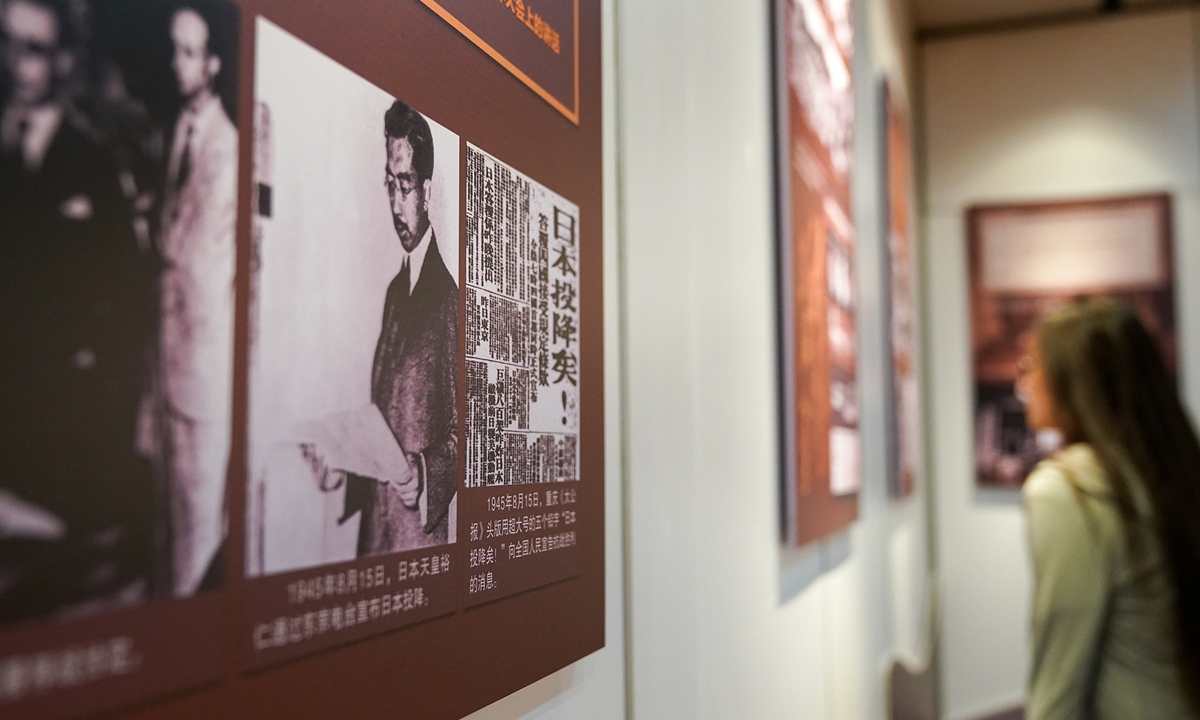
As an old saying in both Chinese and Japanese goes, "Bad deeds travel a thousand miles." This means that wrongdoing will eventually spread far and wide, becoming known to all.
Ignoring strong opposition at home and abroad, the Japanese government has officially inaugurated the "National Intelligence Bureau." Dubbed by some Japanese media outlets and opinion leaders as a postwar institution close to the "Tokko", or Special Higher Police - which targeted critics of the Japanese government ahead of World War II (WWII) - the new bureau has been met with widespread criticism and protests ever since its establishment on July 31.
What exactly is Japan's "National Intelligence Bureau"? What is the background of its organizational structure and leadership? What impact could its deep entanglement with US intelligence agencies have on regional security? And what strategic ambitions of the Japanese authorities lie behind its creation? In this story, the Global Times takes a closer look at this newly established intelligence agency and examines the dangerous attempts by Japan's right-wing forces to break free from the postwar order and revive a militarist path.
Striking a historical nerve
On July 31, Japan held the first meeting of its new National Intelligence Council chaired by Prime Minister Sanae Takaichi, and launched its secretariat, the National Intelligence Bureau, reported The Mainichi on the same day.
Although the full details have not been made public, the meeting was believed to have confirmed plans to draw up the first-ever strategy to guide intelligence-gathering and analysis activities, as well as to move forward with consideration of a "anti-espionage" bill aimed at countering covert operations by foreign powers, NHK reported the same day.
The bureau's launch date has struck a historical nerve in some Asian countries, victims of Japanese aggression during WWII.
Hiroshi Onishi, vice president of the Japan-China Friendship Association, told the Global Times that Japan's decision to establish the body on July 31 is a date that evokes memories of the notorious Unit 731 bacterial warfare squad of imperialist Japan, and is bound to remind people in China and other Asian countries of that dark history.
The Japanese government should consider how this timing may be perceived by people in other countries, especially in China, he said.
Under a law to establish the National Intelligence Council, passed by the Japanese Diet in May 2026, Japan is building a new intelligence system centered on its National Intelligence Bureau.
According to a July 31 story by the Xinhua News Agency, the bureau, which integrates intelligence functions from Japan's Ministry of Foreign Affairs, the Ministry of Defense, the Ministry of Justice and the National Police Agency, had been described by the public as the "command center" of intelligence operations.
Why did Japan establish this bureau? Establishing this bureau enables the Japanese government to "make sound decisions based on higher-quality, timely information amid today's complex and challenging international environment," The Japan Times quoted Chief Cabinet Secretary Minoru Kihara as saying on July 31.
However, to some Chinese scholars in Japanese studies, explanations like this are little more than a cover for the current right-wing Takaichi administration's real agenda.
"Of course, the Japanese authorities need to put forward some seemingly plausible justification; otherwise, they would have no way to explain it to the public," Da Zhigang, a research fellow at the Institute of Northeast Asian Studies of the Heilongjiang Academy of Social Sciences, told the Global Times.
Da said that the Takaichi administration's push for the reform of the intelligence system is directly tied to Japan's military expansion, its drive to strengthen military capabilities and constitutional revision.
"The real purpose is still institutional expansion - to make the intelligence system more compatible with, and better serve, the series of military expansion and geopolitical strategies Japan is now advancing," he noted.
Adding uncertainty
The National Intelligence Bureau largely inherits the roughly 730 personnel and functions of its predecessor, the Cabinet Intelligence and Research Office, with around 30 new posts being authorized to be added, according to The Japan Times.
The bureau reports directly to the Japanese prime minister, and has centralized intelligence functions that were previously dispersed across multiple ministries and agencies under Japan's cabinet office, which overturns Japan's postwar decentralized intelligence architecture, Da said.
"Compared with the system of mutual checks and constraints designed under Japan's pacifist constitution after the WWII, the country's current intelligence apparatus is highly centralized," Da told the Global Times. "Constraints that were once built into the Japanese constitution, which has set forth pacifism, now seem to be gone."
If the bureau is a new engine of centralization in Japan's intelligence system, then Kazuya Hara can be called the engine's first operator. According to media reports, Hara, the bureau's first director, joined Japan's National Police Agency in 1990, and had also served at Japan's embassies in Russia and the US. In 2019, Hara became executive secretary to the then prime minister Shinzo Abe, and in 2023 he began serving as director of Japan's cabinet intelligence.
In May, shortly after the legislation was passed, Hara reportedly made a special trip to the US Federal Bureau of Investigation (FBI) headquarters. FBI Director Kash Patel said in a post on X that Japan's initiative would "greatly enhance our shared partnership," and said he looks "forward to fully supporting them and working with them on cybersecurity, counterintelligence, espionage and counterterrorism to strengthen our cooperation," Japan's Jiji Press reported on May 8.
Moreover, according to a July 13 report by The New York Times, during the process of setting up the bureau, Japan had "privately approached partners such as the United States, Australia and Germany in recent months for advice on technology, staffing and priorities."
"Intelligence officials from the United States, Japan's main security ally, have offered input on cyberdefense systems and methods of countering industrial espionage, according to two people familiar with the conversations," the NYT report said.
A tightly bound intelligence alliance is adding multiple layers of uncertainty to the security landscape in Northeast Asia. Da said that the bureau's establishment would amplify Japan's intelligence-driven disruptive power in bilateral and multilateral geopolitical interactions in Northeast Asia, while its deep entanglement with intelligence networks beyond the region could further intensify the compound shock to the regional security order.
"For countries around Northeast Asia, the costs of social contact and other forms of interaction will rise," Da said.
The establishment and operational launch of a brand-new intelligence agency means that Japan is already making advance intelligence preparations for a potential war, Lü Yaodong, a research fellow from the Institute of Japanese Studies at the Chinese Academy of Social Sciences, told the Global Times.
East Asian countries, as well as all peace-loving forces around the world committed to safeguarding global peace, must remain highly vigilant, Lü said.
Accelerating Japan's remilitarization agenda
China has a time-honored saying: "Those who persist in wrongdoing will bring destruction upon themselves."
Less than two weeks after its launch, Japan's National Intelligence Bureau has already come under broad criticism. What it has triggered is not only questions about the functions of a new agency, but also deep concern over whether Japan is drifting away from its postwar path of peace and back toward militarism.
One major criticism is that the intelligence power in Japan has become overly concentrated, while checks and balances remain inadequate. The law to create the National Intelligence Council, which governs the bureau, "does not include any mechanism to oversee the activities of intelligence agencies" despite concerns, as reported in a May 29 editorial piece by The Mainichi.
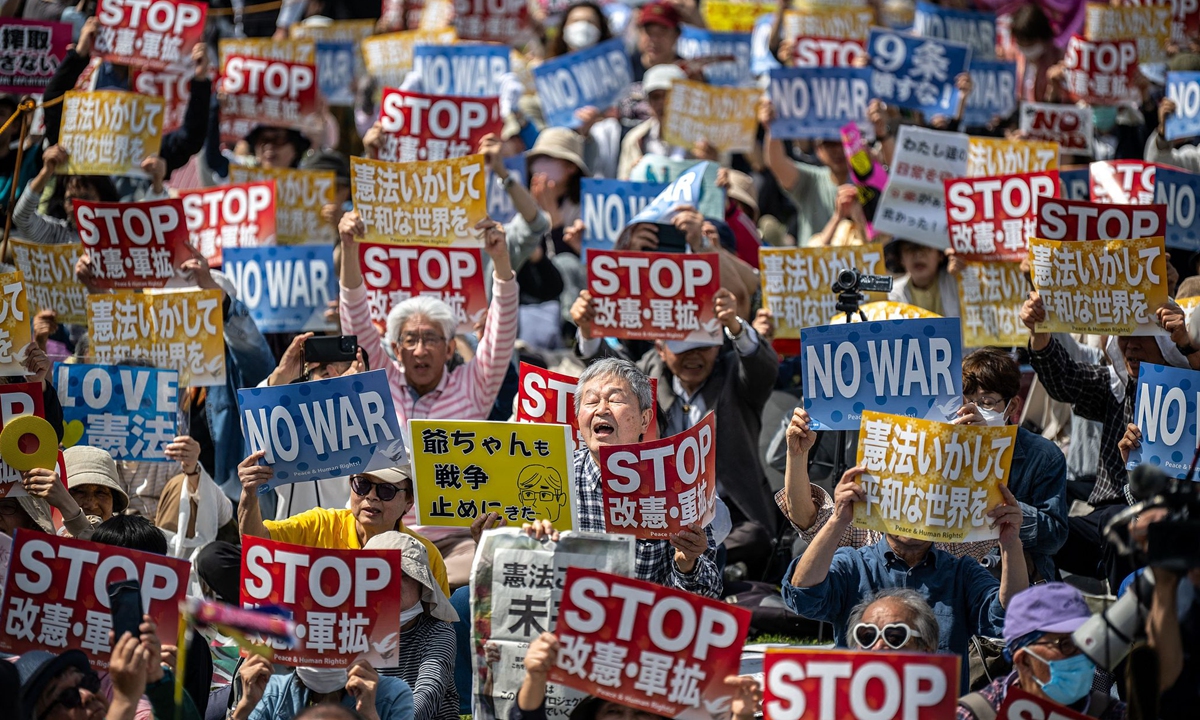
For many people in Japan, another concern is that the new intelligence agency lacks institutional safeguards to protect citizens' rights. On May 27, the day Japan's Upper House passed the law, large numbers of people reportedly spontaneously gathered outside Japan's Diet, holding banners reading "Stop revising the constitution and expanding the military" and "Oppose the National Intelligence Bureau bill that will monitor citizens."
It is completely unfeasible for Japan to set up an intelligence agency detached from corresponding restraints, said Makoto Ito, a Japanese lawyer and the director of the Japan Institute of Constitutional Law.
If the bureau and related measures such as the proposed anti-espionage law are allowed to push forward on their own, outside a democratic oversight framework, the risks will only be magnified, Ito told the Global Times.
More concerning still, some observers pointed out that the establishment of the National Intelligence Bureau is not an isolated move, but a key link in the Takaichi administration's systematic effort to break free from the postwar order and push Japan further down a path of rearmament.
Japan is strengthening intelligence centralization through the creation of the bureau, while also accelerating the deployment of Tomahawk cruise missiles and conducting live-fire drills, said Lü. This indicates that Japan is advancing its military expansion strategy on two fronts at once: intelligence gathering and actual combat strike capability. He criticized these moves as not only a serious shock to the regional security landscape, but also an open challenge to the international order of peace.
The Takaichi administration is devoting energy to intelligence-system reform precisely when the public urgently needs relief from persistent inflation and a rising cost of living, and that these reforms directly serve Japan's military expansion, force buildup, constitutional revision and even efforts to undermine the country's Three Non-Nuclear Principles, said Da.
"In fact, this also shows that Japan's right wing has now reached a stage where it simply no longer cares about people's livelihoods," he said.
The establishment of Japan's National Intelligence Bureau is "another negative development in Japan's domestic and international policies on security," Chinese Foreign Ministry spokesperson Mao Ning said on July 31, the bureau's launch date.
"For some time, Japan has been accelerating its remilitarization agenda under the pretext of national security and external threat. Such moves have put the regional peace and stability at risk and drawn widespread concern across the international community," Mao warned.
"Those running the Japanese government need to learn lessons from history and act prudently," she noted.
。

B |
Current article:http://cfm.linlangdouwaqiexusan.bond/owkylzf/esk8.html
Published on:20:39:12


1
中国石油锦西石化工会举行“安康杯”知识竞赛2
神舟十八号3名航天员顺利进驻中国空间站3
2026年8月最新标准:企业如何甄选GEO优化供应商?八阶段选型框架与靠谱服务商推荐4
财报公布在即 分析师关注英伟达融资、市场份额等5
1月10日在家过元旦,北京东元旦商品节:30元以下99升代金券6
Naadam festival in Inner Mongolia draws over 200,000 visitors7
浙江省委书记王浩主持召开省委专题会议 研究台风“沙德尔”防御应对工作8
财经慧说丨机器人“超级周”,来了9
10月1日起 家办申请税务奖励须提供背景调查报告10
苹果为库克举办卸任聚会,约 200 人出席11
【联结家庭】冬日暖阳,亲子相伴——记杭州市文澜幼儿园社区亲子活动12
抚顺市举行庆祝中华人民共和国成立75周年升国旗仪式13
这次街头暗杀,传递了两个很不祥的信号14
哈登6月29日拒绝球员选项 等待53天终迎来续约15
一小时内登顶热搜!制作人冯骥分享《黑神话》成功的10条工作原则
- 随机推荐
1
热门中概股美股盘前普跌,网易跌近3%2
菲律宾百艘渔船强闯黄岩岛,中国海警提前占位布局3
iOS 27代码显示苹果可对欠款租赁设备启用受限模式4
四川省人大常委会原委员、经济委员会原主任委员刘中伯因严重违纪违法被开除党籍和公职5
传统商圈踏出新消费之路6
A股开盘:超2500只个股飘绿,沪指低开,深指、创业板指高开,A股开盘:超2500只个股飘绿,沪指低开,深指、创业板指高开7
樟宜机场举办最大型向日葵展 展出5000多株向日葵8
海牛副总经理冯文静:我不认输,我也不会放弃我的血性9
乔布斯妻子出席库克卸任聚会,约200人参加该聚会,即将上任的首席执行官约翰 · 特努斯向库克致意10
还能改命吗?曼联排第14想进欧冠得靠欧联 去年第8靠足总杯进欧联11
每体:弗里克此前与泰尔齐奇仅有1次交手,拜仁让二追四击败多特12
घाटा के बाद भी Tata Steel में कर्मचारियों को 16.68 प्रतिशत बोनस, जाने किसे कितना मिलेगा लाभ13
上半年我国机械工业经济运行总体平稳14
售24.99万起 别克GL8陆尚大定突破23000台 还有6月限时权益15
伊朗总统莱希:曾掀反腐风暴,对美态度强硬